Q: When was the Court of BiH established?
A: On 3 July 2002 the Parliament of Bosnia and Herzegovina adopted the Law on the Court of BiH, promulgated on 12 November 2000 by the High Representative in Bosnia and Herzegovina. The Court was formally established by the Decision of the High Representative dated 8 May 2002, which is when the first seven judges of the Court were appointed. This day is marked as the Day of the Court of BiH.
Q: Why was the Court of BiH established?
A: It was necessary to provide for judicial protection in the matters that under the BiH Constitution fall under the jurisdiction of the Court of BiH, and to ensure the protection of fundamental human rights and freedoms at the state level, as guaranteed by the Constitution of BiH.
Q: Where is the Court of BiH located?
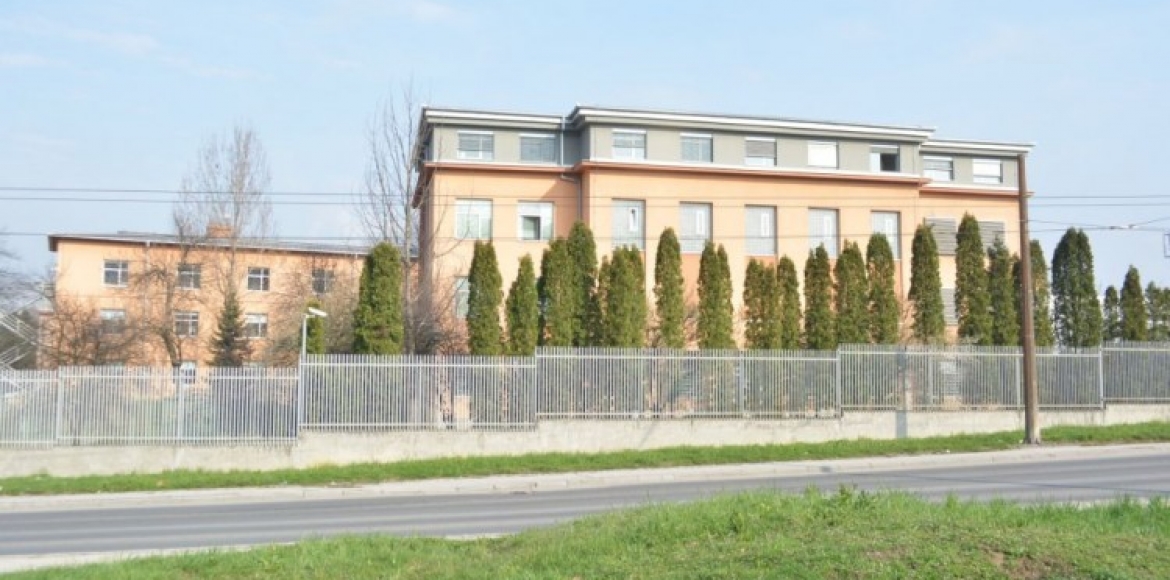
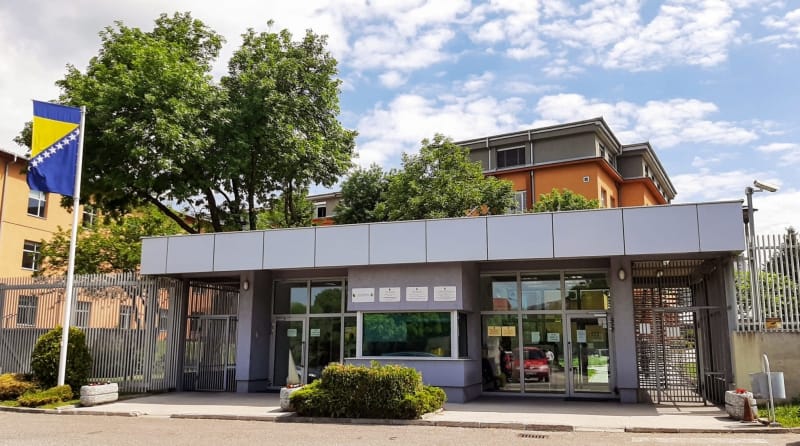
A: The Court of BiH is located in Sarajevo, at 88 Kraljice Jelene street.
Q: What are the competencies of the Court of BiH?
A: The competencies of the Court of BiH are regulated by the Law on the Court of BiH and are related to: criminal, administrative and appellate jurisdiction.
Within its criminal jurisdiction, the Court of BiH tries cases pertaining to the crimes laid down by the laws of BiH, which include war crimes, organized crime, economic crime and corruption cases. The Court of BiH also has jurisdiction over the criminal cases punishable by the laws of entities and the Brčko District of BiH, under the conditions specified and stipulated by law.
Administrative jurisdiction means that the Court of BiH adjudicates cases pertaining to the complaints against decisions issued by BiH institutions as part of their public functions. The Court of BiH rules on the requests for the protection of rights and freedoms of citizens as guaranteed by the BiH Constitution, in cases when those rights and freedoms are violated by a final decision of a BiH institution, if no other redress has been provided through the Court. Additionally, the Court of BiH tries property disputes between the state of BiH, entities and the Brčko District, property disputes between BiH institutions performing public functions, property disputes as a consequence of damage caused by administrative bodies and other BiH institutions, or by official persons working in those bodies and institutions while performing their duties, as well as other property disputes when the Court’s jurisdiction is stipulated by the BiH laws or an international treaty.
As part of its appellate jurisdiction, the Court of BiH rules on appeals from decisions issued by the Criminal Division or Administrative Division, and rules on the complains pertaining to violations of the Election Law of Bosnia and Herzegovina.
However, the Court of BiH does not act on appeals from decisions issued by Entity courts.
Q: Which are the Divisions and Sections of the Court of BiH?
A: There are three Divisions within the Court of BiH: Criminal, Administrative and Appellate. The Criminal Division contains: Section I – War Crimes Chamber; Section II – Organized Crime, Economic Crime and Corruption and Section III – General Crime.
Respective sections of the Appellate Division rule on appeals against decisions made within the Criminal and Administrative divisions, and rule on complaints related to the breaches of the Election Law.
Within the Court of BiH there are units in charge of general administrative and legal issues, financial affairs and legal support to judges, that is, all those activities that are necessary for the legal, timely and efficient functioning of the Court sections and of the Court as a whole. Those are the Common Secretariat and The Registry.
The Common Secretariat provides support to the Administrative Division and the General Crime Sections of the Criminal and Appellate Divisions.
The Registry provides support to the Section for War Crimes and the Section for Organized Crime, Economic Crime and Corruption of the Criminal and Appellate Divisions of the Court.
Q: Who appoints the President of the Court of BiH and what is his/her role?
The High Judicial and Prosecutorial Council appoints the President of the Court of BiH. President of the Court of BiH is one of the Judges appointed to the Court of BiH, who must posses the required managerial and organizational skills important for the work of the Court of BiH. President is appointed to a mandate of six (6) years and can be reappointed.
The responsibilities of the President of the Court are regulated by the Law on the Court of BiH and internal acts of the Court. President of the Court, inter alia, has the following responsibilities:
Q: Who is the current President of the Court of BiH?
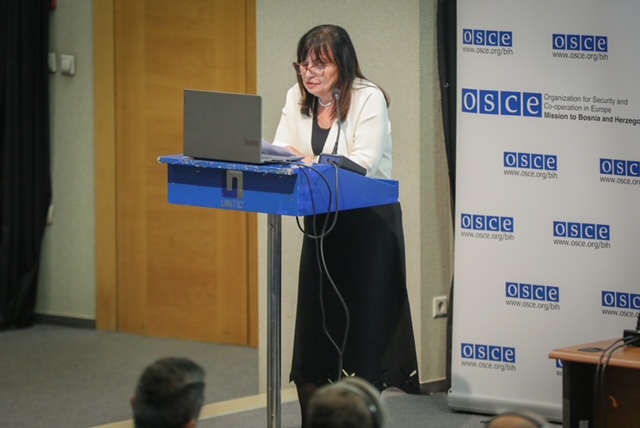
A: The current President of the Court of BiH is Meddzida Kreso. She was born on 22 December 1947 in Bijeljina where she finished the High school and then graduated from the School of Law, University of Sarajevo, in 1970. After taking the bar exam in 1973 she was appointed municipal prosecutor in Mostar, and in 1978 a judge of the District Court in Mostar, where she stayed until 1989.
Between 1989 and 1992, she was the President of the Labor Court in Mostar. Between 1996 and 1998 she worked as a lawyer, and from 1998 to 2001 she was a legal officer in banks, and in 2001 was appointed as the Deputy Prosecutor of the FBiH Prosecutor’s Office; between 2003 and 2004 she was the Deputy Chief Prosecutor of the BiH Prosecutor's Office. On 10 October 2004, she was appointed as a Judge and the President of the Court of BiH.
Q: Who is who in the courtroom?
A: The Judge manages trials, hears witnesses, reviews evidence, rules on criminal sanction, provides for comprehensive deliberation of cases and establishment of the truth, decides on prosecution and defense motions, and performs other duties as provided by the law.
The Prosecutor conducts investigations, issues indictments and argues prosecution case, files submissions with the Court in accordance with the law, carries out direct and cross-examination of witnesses and performs other duties provided by the law.
The Accused is a person against whom one or more counts of the indictment have been confirmed. The accused has the right to examine witnesses and is entitled to be represented by an attorney in criminal proceedings before the court.
The Suspect is a person for whom there are grounds for suspicion that he/she has committed a crime.
Defense attorney for the suspect/accused represents the suspect/accused before the court, files submissions on behalf of that person (motions, appeals, petitions), submits objections during trial, carries out direct and cross-examination of witnesses.
Witness is heard when there is a probability that his/her testimony will provide an information about a crime, the perpetrator and other relevant circumstances. He/she comes upon the summons of the Prosecutor and/or the Court. The summons explains that the witness is called in the capacity of a witness, specifying the venue and the time where/when he/she needs to come, as well as the consequences of failure to appear. The witness is entitled to reimbursement of expenses incurred by his arrival to the Court, and a per diem for her/his time spent at the Court. He/she is also entitled to a certificate confirming that he/she was a witness in a case in order to justify his/her absence from work. There are persons who are not eligible to be witnesses in a particular case, as well as persons who are not obliged to testify in a particular case. These situations are regulated by the Criminal Procedure Code of BiH (CPC BiH).
In addition, the CPC BiH provides that provisions set forth in special laws apply to protected witnesses, which are as follows:
Upon his/her arrival in the Court of BiH, Witness Support Section staff looks after the witness, while a Court Management legal officer ushers him/her into the courtroom.
An expert witness may also be heard before the court, if it is necessary for him/her to present an expert opinion, report or findings achieved as a result of expertise.
Court Officer of the Court Management Section is responsible for providing technical and administrative support to judges for the duration of the proceedings in the case he has been assigned. He/she is a contact person for parties to the proceedings and other interested persons. He/she overviews the entire management of the case, gives assistance to the Judges and parties in planning and scheduling trials, provides for preparations before hearings take place, regularly prepares documents needed during trial, takes care of evidence and renders other forms of assistance in terms of managing cases at the request of the judge and/or the Presiding Judge. The Court Officer also prepares a summary record of a trial (in all cases when this is not done by the recording clerk), which is then available to the Judges and the parties.
Legal Officer assists Judges in preparing and drafting decisions such as verdicts, procedural decisions, orders etc., and can also be present at a trial. He/she takes an active role in the cooperation with Judges of a Panel by helping them in their daily decisions in criminal cases the particular Judge and/or Panel is working on. The Legal Officer cooperates with the Court Officer of the Court Management in terms of arrangements pertaining to the need to respond to particular submissions of the parties, and takes care of the deadlines for issuing specific decisions. The Legal Officer attends Panel sessions at which decisions are made on appeals, as well as in other deliberations.
Officer of the Witness Support Unit is a Court employee (psychologist or a social worker) responsible for providing support to witnesses who testify in the cases tried by the Court of BiH. Support is provided before, during, and after giving the testimony. The aim is to make the process of appearing and testifying before the Court easier for the witnesses, so that the testimony would not cause additional suffering, stress and negative consequences for the physical and mental condition and health of the witness. The Witness Support Unit staff receive all witnesses and take them to waiting rooms specially adapted to them and provide psychological help when necessary. When necessary and at the request of a witness, an officer of the Witness Support Unit is present during the testimony. The Unit, in cooperation with the Public Information Section of the BiH Court and various associations of victims from all over BiH, organizes the arrival of witnesses at individual hearings when verdicts are announced in war crime cases. Since the announcements of verdicts cause intensive emotional reactions of victims, witnesses, and family members present, officers of the Witness Support Unit are always present in the public in order to react when necessary. The Witness Support Unit conducts its activities showing the highest level of moral integrity, impartiality and confidentiality.
Translator provides interpretation for the entire course of the trial from official languages of the Court of BiH into English and vice versa, depending on the speaker. All participants in the trial as well as the audience can follow translation by using audio receivers which are handed out to them by court technicians before the trial. Translators also provide written translation of documents submitted during the proceedings, if the particular cases require the involvement of international Judges, prosecutors or lawyers.
Recording clerk takes minutes at hearings and/or deliberations, such as plea arraignments, review of plea agreements, court panel decision/making on appeals, etc.
Technician records the complete course of a trial onto CD, makes sure that technical equipment in the courtroom is properly functioning, looks after other technical issues related to the AV means (such as evidence requiring technical support - for example video tapes).
Q: What is the budget of the Court of BiH?
A: The total amount allocated in the national budget for the Court of BiH in 2009 equates to KM 10,721,388. The approved budget, which is only 1.4% higher then the budget approved for 2008, is insufficient to cover all responsibilities assumed by the state with respect to the Court of BiH. The year of 2009 is the key transition year, in the course of which a gradual replacement of all international judges with national judges and the completion of the transition process for Registry employees is planned. As of December 2009, all judges and employees of the Court should be financed exclusively from the budget of BiH institutions.
The funds are being used for salaries, allowances and other reimbursements for the judges and administrative support staff, office costs, building and equipment maintenance, costs incurred by and reimbursements for attorneys, expert witnesses and witnesses, and for other purposes.
In addition to this amount, in 2009 the international community donated significant funds to support the Court of BiH, particularly the work of the Special Department for War Crimes and Special Department for Organized Crime. Donor funds have been used to cover the expenses related to the engagement of international judges, legal officers and other support staff as well as for investments in the building, equipment, etc. Thanks to these funds, we have overcome most problems caused by the insufficient funding in the national budget. The proposed 2010 budget of the Court of BiH amounts to KM 12,857,000.00.
Q: Who provides the funding for the operation of the Court of BiH?
A: Upon request from the Ministry of Finance and Treasury of BiH, in August of the current year the Court of BiH submits a budget proposal for the following year. The Ministry forwards the budget proposal for adoption to the Parliament of BiH, which adopts the final amount of the budget. The funds are secured from within the revenues of BiH. International Community supports the Court of BiH through financial donations and benefits in kind . The main donors are: USA, UK, Germany, European Commission, Netherlands, Spain, Italy, Norway, Sweden, Austria, Ireland, Denmark, Belgium, Switzerland, Luxembourg, Greece, Cyprus and benefits in kind from Japan, Portugal, Canada, and Finland.
Q: Are the persons who were tried before the Court of BiH, and who were found not guilty, entitled to compensation?
A: A person who has been unjustly convicted of a crime or has been subjected to an unwarranted apprehension is entitled to rehabilitation, the right to compensation from the budget funds as well as other rights stipulated by the law. The BiH Criminal Procedure Code stipulates under which circumstances a person may claim the right to compensation. If the case involving an unjust conviction or unwarranted apprehension of a person has been reported in the media, affecting the reputation of the person in question, the Court will, at the request of that person, publish in the media a press statement on the decision declaring the previous conviction unjustified and/or the apprehension unwarranted. If the case has not been reported in the media, such a statement, at the request of the person in question, will be forwarded to the authority or legal entity where that person is employed. In case of the need for rehabilitation of that person, the statement will be forwarded to the political party or civic association.
Q: How are the Judges of the Court of BiH appointed?
A: According to the Law, the High Judicial and Prosecutorial Council appoints Judges including the President of the Court of BiH and additional judges to the Court of BiH. The HJPC advertises job vacancies, and then decides on the appointment. Judges of the Court of BiH must have at least eight years of experience as judges, prosecutors, attorneys or other relevant legal experience following the bar exam, and are appointed for life, having in mind the fact that their term in office may cease in case they resign or reach the age limit which is obligatory for retirement, or in case they are removed from office for the reasons stipulated in the Law.
Q: How many international and national judges are there?
A: There are 53 judges in total. There are 48 national and 5 international judges.
Q: What are the War Crimes Panels and who are their members?
A: The Court Panel is composed of three judges who are assigned to a certain case. In principle, the Court works in panels, but in exceptional cases stipulated by law (phases of proceedings), an individual judge acts in a case. The Appellate Panel is also composed of three judges who decide upon the appeal from first-instance decision.
Currently, two out of four court panels in the War Crimes Section of the Court of BiH comprise of three judges from Bosnia and Herzegovina and one international judge. The Judge from BiH is always the Presiding Judge.
Q: Who appoints international judges and prosecutors?
A: International judges are appointed by the High Judicial and Prosecutorial Council of Bosnia and Herzegovina. A Special Commission of the Council reviews all applications for the vacant posts of international judge, evaluates candidates, creates rank lists, and gives recommendations to the Council as to who should be appointed.
In order to be appointed to this position, the International Judge must meet the requirements that match the requirements for national judges in the Court of BiH.
Q: What is the difference between the War Crimes Chamber at the Court of BiH and the International Criminal Tribunal for the former Yugoslavia (ICTY)?
A: The ICTY is an ad hoc tribunal, which has a limited existence, and which was established to hand down verdicts for serious violations of international humanitarian law and for war crimes committed in the territory of the former Yugoslavia since 1991. This fact limits the mandate of the ICTY so that it can deliver judgments only for the most responsible persons who committed war crimes, in accordance with the time-frame and criteria for issuing the indictment as defined by the ICTY Prosecution (OTP).
The Court of BiH is a judicial body which does not have a time-limited mandate. Unlike the ICTY whose work is regulated by the Statute issued by the UN Security Council and the Rulebook adopted by the ICTY judges, the Court of BiH hands down verdicts in accordance with the laws of Bosnia and Herzegovina, such as the BiH Criminal Code and the BiH Criminal Procedure Code. Besides the fact that the international judges and prosecutors work at the Court of BiH and the Prosecutor's Office of BiH, the key functions are held by the citizens of Bosnia and Herzegovina. Trials are conducted in one of the official languages of BiH in accordance with the national laws, while the convicted persons serve their time in prisons in BiH.
Q: What are the rights of the accused before the Court of BiH?
Those rights include:
A:
All rights are in accordance with the ECHR and other international instruments.
Q: Are the entity law enforcement agencies obliged to act by orders of the Court of BiH and cooperate with the BiH Prosecutor's Office?
A: In compliance with the provisions of the BiH Criminal Procedure Code, all agencies in BiH are obliged to have official cooperation with the Court of BiH and the BiH Prosecutor's Office.
Q: What is the status of the Court of BiH and the BiH Prosecutor's Office in relation to the entity courts and offices of prosecutors? Is there any supervision over them?
A: The BiH Prosecutor's Office has no supervisory power over the work of the entity offices of prosecutors.
The Court of BiH takes the final and legally binding position in terms of the implementation of BiH laws and international treaties upon request from any of the Entity courts or Brcko District courts, and in some cases resolves conflicts of jurisdiction between Entity courts and Brcko District courts, as well as between the Court of BiH and any other court.
Q: How can the public have insight into the work of the Court of BiH?
A: The Law on Free Access to Information provides for the public to have an insight into the work of the Court of BiH. According to this Law, trials are open for the public, which means that citizens and journalists have the right to attend trials. Apart from this, the public has access to public documents such as: confirmed indictments, verdicts, various court decisions and the like. Naturally, there are cases when the court panel can make a decision to close a trial for the public in the interest of the protected witness or confidential data, or if certain documents cannot be given to citizens or journalists for the same reasons.
The Public Information and Outreach Section conducts a program of providing the public with the information on the work of the Court of BiH by organizing visits to the Court of BiH and by establishing contacts with the officials of these institutions so that the public can get a chance to learn directly about their work and the way they operate.
Q: What is the procedure for getting access to documents (verdicts, indictments)?
A: If you wish to get access to a document, you need to send a written request to the Public Information and Outreach Section. The Public Information and Outreach Section will respond to your request within 15 days, informing you as to how and when you can receive the document in question, or alternatively on the reasons for not getting access to the document.
Q: Does the Court of BiH have its own library and how can those who are not employees of the Court get access to the library?
A: The Court’s library is located within the Legal Department. Currently, the library has two librarians, one employed by the Registry and the other by the BiH Prosecutor's Office. The users of the library are exclusively employees of the Registry, the Court of BiH and the BiH Prosecutor's Office, while other interested persons may also be provided with access to basic information and guidelines.
Currently, the library has around 1000 titles mainly from the field of criminal law and international humanitarian law. A small portion of the books has been procured through donations, while the rest was purchased in accordance with the needs of the Registry, the Court and the BiH Prosecutor's Office. There is an ongoing process of equipping and automatization of the library, which should provide for a centralization of the data and accelerate procedures for issuing the books, decrease the work expenditures, enable access to the library’s catalogue through the Intranet, enable access to multimedia contents and electronic documents and the like. It is envisioned that the library should have 20 reading seats, out of which 8 will be equipped with computers.
| M | T | W | T | F | S | S |
|---|---|---|---|---|---|---|
| 01 | 02 | 03 | 04 | 05 | ||
| 06 | 07 | 08 | 09 | 10 | 11 | 12 |
| 13 | 14 | 15 | 16 | 17 | 18 | 19 |
| 20 | 21 | 22 | 23 | 24 | 25 | 26 |
| 27 | 28 | 29 | 30 | 31 |