Common Secretariat

Jurisdiction, Organization, and Structure of the Court of Bosnia and Herzegovina


Jurisdiction, organization and structure of the Court of Bosnia and Herzegovina are regulated by the Law on Court of Bosnia and Herzegovina.


Organization and Structure

President of the Court of Bosnia and Herzegovina

The President of the Court is appointed by the High Judicial and Prosecutorial Council. The President of the Court organizes the work of the Court and provides for the establishment of cooperation with other institutions. When absent, the President of the Court is replaced by a judge who was assigned to be his replacement in accordance with the annual schedule. For certain activities, the President of the Court may assign his/her own replacement from among the judges of the Court. The President is appointed for a term of six (6) years with the possibility of reappointment. 

The Plenum of the Court of Bosnia and Herzegovina

The Plenum of the Court consists of the President and all members of the Court. Every judge has the right and obligation to participate in the work of the Plenum of the Court. The President prepares and convenes the plenum session, assigns a reporting judge and chairs the work of the Plenum. The Plenum adopts its decisions with a simple majority of all judges of the Court.


Competencies of the Plenum:

a)      To draw up and adopt the Rules of Procedure of the Court;

b)      To elect General Secretary;

c)      To adopt working schedule proposed by the President;

d)      To adopt Court budget proposal.


Judges and Court Panels

Currently, there are 54 judges at the Court, 48 national and 6 international. Court panels comprise three judges each.

The cases are allocated to the panels pursuant to the automatic case allocation system.


Structure

The Court of Bosnia and Herzegovina has three divisions: criminal, administrative and appellate.

The Criminal Division consists of three Sections – Section I for War Crimes, Section II for Organized Crime, Economic Crime and Corruption and Section III for General Crime. The Administrative Division deals with civil cases and consists of one panel. The Appellate Division consists of Section I for War Crimes, Section II for Organized Crime and Section III for General Crime and appeals lodged against the decisions of the Administrative Division.

Criminal Division

Criminal Division consists of at least ten judges and three sections:

  • Section I for War Crimes has four first-instance court panels. Three panels are composed of four judges each, one international and tree national. As a rule, the national judge is the president of the panel.
  • Section II for Organized Crime, Economic Crime and Corruption has four court panels composed of three judges each.
  • Section III for all other criminal offences under the jurisdiction of the Court has four court panels composed of three national judges each.

Administrative Division

The Administrative Division consists of at least five judges as follows: one administrative panel composed of three judges, civil procedure section and enforcement procedure section. The Administrative Division is chaired by the President who is elected by all judges of that Division, for a term of five (5) years.

Appellate Division

The Appellate Division consists of at least ten judges and three Sections:

  • Section I consists of one second-instance court panel composed of three judges, two international and one national. As a rule, the national judge is the president of the panel. This panel decides upon the appeals lodged against the decision of Section I of the Criminal Division.
  • Section II consists of one second-instance court panel composed of three judges that decides on the appeals lodged against the decisions of Section II of the Criminal Division.
  • Section III consists of one second-instance panel composed of three national judges who decide upon the appeals lodged against the decisions of Section III of the Criminal Division and the decisions of the Administrative Division and render decisions upon electoral complaints.

The Court has a Common Secretariat and a Registry for Section I and Section II of Criminal and Appellate Divisions

Common Secretariat

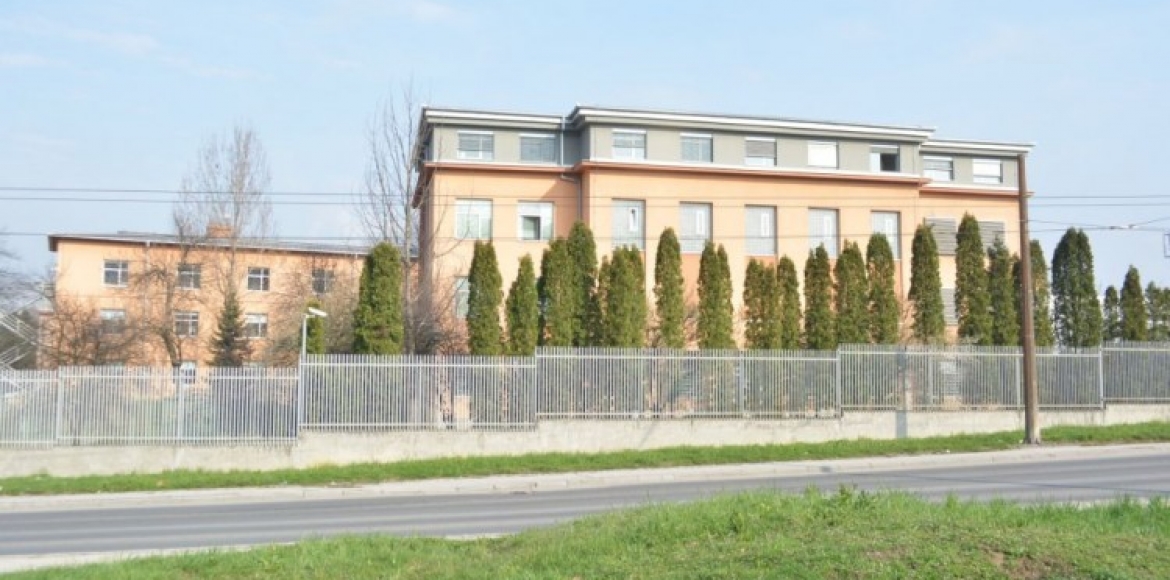
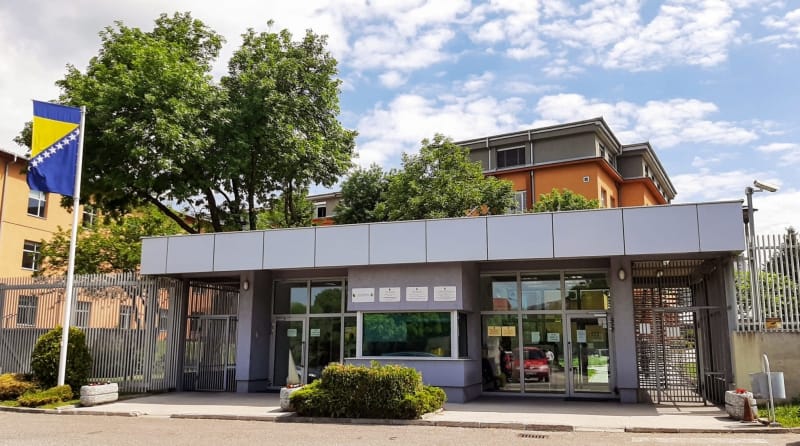
The Common Secretariat is responsible for the administration and the provision of support services to Section III of the Criminal and Appellate Divisions and the Administrative Division. The Common Secretariat is managed by a Chief Registrar, assisted by two officers.

The Common Secretariat has the following organizational units:

a)      Department for legal, general, administrative and technical support affairs – composing general and individual court documents, language editing, personnel affairs, typewriting service, IT service, registry office service, currier service and other.

b)      Department for financial-material affairs – preparing financial plans and reports, book keeping and accounting services and other financial-material affairs.

c)      Court Sections Legal Support Service

a.       Secretariat of Section III of the Criminal Division – providing direct legal assistance to the judges of that Division

b.      Secretariat of Administrative Division – providing direct legal assistance to the judges of that Division

c.       Secretariat of Section III of the Appellate Division – providing direct legal assistance to the judges of that Division.

The Registry

The Registry for Section I and Section II of the Criminal and Appellate Divisions is managed by a Registrar who is responsible, in cooperation with the President of the Court, for the administration and provision of administrative, legal and other support services to Section I and Section II of the Criminal and Appellate Divisions.

The Registry has the following organizational units:

a)      Legal Department – under the direct supervision of the President of the Court, it provides legal support to judges and panels of Section I and Section II in carrying out their duties under the law.

b)      Court Management Section – manages the daily activities to ensure a smooth operation of the Court.

c)      Witness Support Section – provides practical and, when necessary, psychological support to witnesses during testimony before the Court.

d)      Public Information and Outreach Section  responsible for the contacts of the Court with the media and any other external contact of public nature.  

e)      Administration  responsible for providing administrative support to the work of Section I and Section II, including IT services, translation services and other practical support.

Jurisdiction:

Criminal Jurisdiction

Within its criminal jurisdiction, the Court of Bosnia and Herzegovina has jurisdiction over criminal offences defined in the Criminal Code of Bosnia and Herzegovina and other laws of Bosnia and Herzegovina (Article 13 Law on Court of BiH and Article 23 CPC BiH).

The Court has further jurisdiction over criminal offences prescribed in the Laws of the Federation of Bosnia and Herzegovina, Republika Srpska and the Brcko Disctrict of Bosnia and Herzegovina, when such criminal offences:

a)      endanger the sovereignty, territorial integrity, political independence, national security or international personality of Bosnia and Herzegovina;

b)      may have serious repercussions or detrimental consequences to the economy of Bosnia and Herzegovina or may have other detrimental consequences to Bosnia and Herzegovina or may cause serious economic damage or other detrimental consequences beyond the territory of an Entity or the Brcko District of Bosnia and Herzegovina.

Within its criminal jurisdiction, the Court is further competent to:

a)      take a final and legally binding position on the implementation of Laws of Bosnia and Herzegovina and international treaties on request by any court of the Entities or any court of the Brcko District of Bosnia and Herzegovina entrusted to implement  the Law of Bosnia and Herzegovina;

b)      issue practice directions on the application of the substantive criminal law of Bosnia and Herzegovina falling within the competence of the Court on genocide, crimes against humanity, war crimes and violations of the laws and practices of warfare, and individual criminal responsibility related to those crimes, ex officio or on the request by any court of the Entities or of the Brcko District of Bosnia and Herzegovina;

c)      decide on any issue relating to international and inter-Entity criminal law enforcement, including relations with Interpol and other international police institutions, such as decisions on the transfer of convicted persons, and on the extradition and surrender of persons, requested from any authority in the territory of Bosnia and Herzegovina, by foreign States or International Courts or Tribunals;

d)      decide on any conflict of jurisdiction between the courts of the Entities and the Court of the Brcko District of Bosnia and Herzegovina and between the Court of BiH and any other Court;

e)      decide on the reopening of criminal proceedings for criminal offences prescribed in the Laws of Bosnia and Herzegovina.

Administrative Jurisdiction

Within its administrative jurisdiction, the Court is competent to decide on actions taken against final administrative acts issued in the exercise of a public function, or when it comes to the silence of administration of the institutions of Bosnia and Herzegovina and its bodies, public agencies, public corporations, institutions of the Brcko District and any other organisation as provided by State Law.

The Court has administrative jurisdiction over the following:

a)      The assessment of the legality of individual and general executive administrative acts adopted under State law, performed in the exercise of public functions by the BiH authorities, for which judicial review is not otherwise provided by law;

b)      Property disputes between the Entities and the Brcko District and between the institutions of Bosnia and Herzegovina, which are interrelated with the exercise of public functions;

c)      Conflict of jurisdiction between the courts from the Entities, and between the courts of the Entities and the courts of the Brcko District and between the Court of Bosnia and Herzegovina and any other court;

d)      Reopening of proceedings in disputes listed under the law (Law on Court, Art.14, par.2).

Appellate Jurisdiction

Within the appellate jurisdiction, the Court of Bosnia and Herzegovina is competent to decide upon appeals against judgements or decisions delivered by the Criminal or Administrative Division of this Court, extraordinary legal remedies against final judgments rendered by the divisions of the Court, save the requests for reopening of proceedings.

The Court has appellate jurisdiction over:

a)      complaints concerning violations of the electoral law and the additional regulations and directives issued by the Central Election Commission;

b)      any other case for which competence is provided by the laws of Bosnia and Herzegovina.


Print
english bos hrv срп

Indictments:
Section I   Section I for War Crimes
Section II  Section II for Organised Crime, Economic Crime and Corruption
Section III Section III for all other Criminal Actions from Court of BiH Jurisdiction

Verdicts:
Section I   Section I for War Crimes
Section II 
Section III Section III for all other Criminal Actions from Court of BiH Jurisdiction

All documents provided herein are for information only and are not to be considered as official records of the Court.